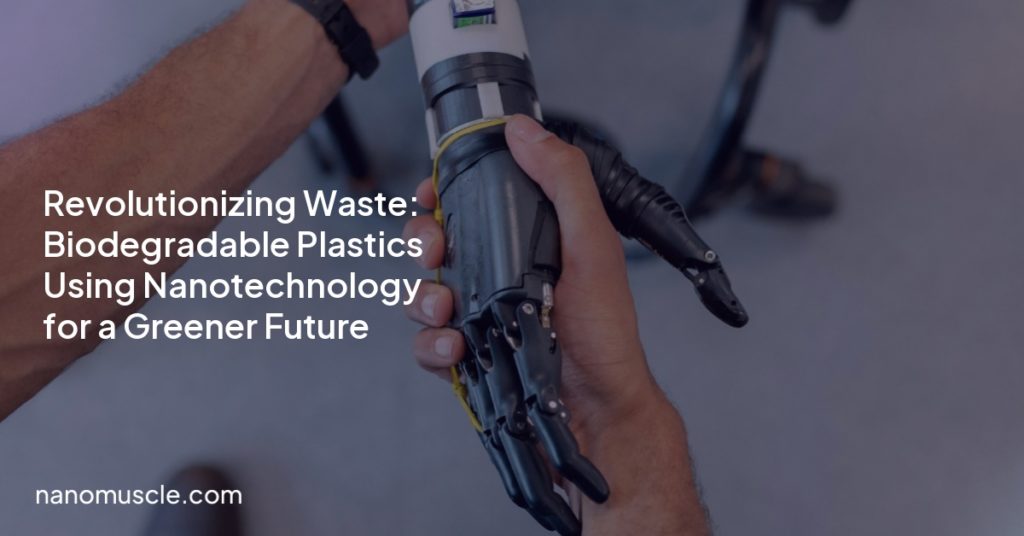
Sustainable plastics nanotechnology offers promising solutions to the growing plastic waste crisis. By integrating nanotechnology, we aim to create plastics that are more efficient and eco-friendly.
Definition and Importance
Sustainable plastics nanotechnology focuses on developing plastics with enhanced properties that allow for quicker degradation and reduced environmental impact. It’s important because traditional plastics can take hundreds of years to decompose, contributing significantly to pollution. By using nanomaterials, we can alter the molecular structure of plastics, making them more durable yet easier to break down after use. For example, nanoparticles can be embedded in polymer matrices to facilitate faster degradation.
The Role of Nanotechnology in Sustainability
Nanotechnology improves sustainability by enhancing the efficiency and performance of bioplastics. We employ techniques like nanoparticle infusion to strengthen materials, thus reducing the need for large quantities of plastic. This results in lower energy consumption and fewer raw materials being used. Additionally, nanotechnology aids in developing plastics that degrade under specific environmental conditions, such as exposure to sunlight or certain microbes. This controlled degradation ensures that plastics don’t persist in the environment for long periods.
Advances in Sustainable Plastics Nanotechnology
Advances in sustainable plastics nanotechnology continue to transform the industry. These breakthroughs contribute significantly to environmental conservation and material efficiency.
Recent Innovations
Recent innovations in sustainable plastics nanotechnology include the development of self-healing polymers. These polymers can repair minor damages without external intervention, extending product life and reducing waste. Another notable innovation is the creation of biodegradable nanocomposites. These materials incorporate nanoparticles to enhance strength and durability while ensuring the plastic decomposes naturally.
Researchers have also engineered nanoscale additives that improve the mechanical properties of bioplastics. These additives allow bioplastics to compete with petroleum-based plastics in terms of strength and flexibility. Additionally, the introduction of nanosensors into plastics enables real-time monitoring of degradation, ensuring controlled breakdown under specific conditions.
Case Studies And Applications
Several case studies highlight the practical applications of sustainable plastics nanotechnology. In the packaging industry, companies use biodegradable nanocomposites to create eco-friendly packaging solutions. For instance, grocery stores have adopted these materials for fruit and vegetable containers, reducing plastic waste significantly.
In the medical field, sustainable plastics nanotechnology contributes to the development of biocompatible materials for implants and prosthetics. One notable case involves the use of nanocomposite polymers in orthopedic implants, which promote bone healing while degrading safely over time.
Automotive manufacturers leverage self-healing polymers to produce more durable vehicle components. By integrating these advanced materials, manufacturers extend the lifespan of car parts and reduce the need for replacements, contributing to waste reduction and resource conservation.
These examples demonstrate the diverse applications and substantial impact of sustainable plastics nanotechnology across various industries.
Challenges in Implementing Sustainable Plastics Nanotechnology
Sustainable plastics nanotechnology offers immense potential for a greener future. However, several challenges must be navigated to realize its full impact.
Technical Challenges
Technical challenges arise in developing consistent nanoscale materials. Precise control over the size, shape, and distribution of nanoparticles is crucial for maintaining material properties and functionality. For example, ensuring uniform dispersion of nanoparticles within bioplastics can be difficult, affecting their mechanical strength. Additionally, scalable manufacturing processes for nanocomposites remain limited, hindering mass production. Standardizing these processes would be another technical hurdle, impacting consistency and quality across various applications.
Economic and Regulatory Obstacles
Economic and regulatory obstacles hinder the broader adoption of sustainable plastics nanotechnology. High development and production costs make sustainable nanomaterials less competitive compared to traditional plastics. For instance, the initial investment in nanotechnology research and infrastructure can be substantial. Furthermore, existing regulations lack the specificity to address the unique properties and potential risks of nanomaterials. Regulatory bodies must evolve to create comprehensive guidelines that ensure safety and efficacy without stifling innovation. Without supportive policies and incentives, industry uptake will remain slow, despite the clear environmental benefits.
Future of Nanotechnology in Plastics
The future of nanotechnology in plastics promises transformative changes. Innovations will enable more eco-friendly and high-performance materials.
Emerging Trends
Key trends include the integration of renewable resources and enhanced biodegradability. Biodegradable nanocomposites, derived from natural materials like cellulose and chitosan, show potential. Nanoscale reinforcement improves strength without compromising environmental benefits. Companies like NatureWorks lead in producing bioplastics with superior mechanical properties.
Advanced recycling methods are evolving. Nanotechnology aids in the breakdown and reformation of plastic waste at a molecular level. This results in higher quality recycled materials and reduced dependence on virgin plastics. Catalytic nanoparticles, for instance, increase the efficiency of chemical recycling processes.
Self-healing materials represent another trend. Nanotechnology enables plastics that repair themselves when damaged, extending the lifespan of products. Research at institutions like MIT focuses on integrating such capabilities into everyday plastics.
Research and Development Priorities
Investments in R&D focus on scalability and cost reduction. Developing cost-effective manufacturing processes for nanocomposites remains crucial. Collaboration between academia and industry aims to overcome these economic barriers. Universities and companies often partner to accelerate technological advancements and commercial viability.
Environmental impact assessments guide R&D priorities. Ensuring that innovations do not introduce new environmental hazards is vital. Life cycle analyses quantify the overall benefits and potential drawbacks of new materials. Regulatory standards must adapt to accommodate these assessments to promote sustainable practices.
Customization of nanomaterials is crucial. Tailoring nanoscale properties to specific applications enhances performance and sustainability. For example, nanoscale silicates are used in automotive applications to improve thermal stability and reduce weight.
Priority areas also include improving the compatibility of nanomaterials with existing recycling streams. Ensuring recyclability without degrading the quality of recycled plastics is essential. Research focuses on developing nanoparticles that integrate smoothly into current waste management systems.
Through these advancements, the future of nanotechnology in plastics is poised to revolutionize the industry while mitigating environmental impacts.
Conclusion
Sustainable plastics nanotechnology holds immense promise for revolutionizing the industry and reducing environmental impacts. By focusing on innovations like self-healing polymers and biodegradable nanocomposites, we can extend product lifespans and promote natural decomposition. Upcoming trends such as integrating renewable resources and advanced recycling methods will further enhance the sustainability of plastics.
Research priorities should remain on scalability, cost reduction, and environmental impact assessments to ensure these technologies are both practical and eco-friendly. Customizing nanomaterials for specific applications and improving recycling compatibility are crucial steps toward a sustainable future. As we continue to explore these advancements, the potential for creating a more sustainable world through nanotechnology becomes increasingly attainable.
Sarah Jennings is a renowned expert in nanotechnology applications, with over 15 years of experience in pioneering research and development. Holding a Ph.D. in Nanoscience from MIT, she has been instrumental in advancing the field through her innovative work. As a leading voice in nanotech applications, Dr. Jennings has contributed to groundbreaking projects in renewable energy, medical advancements, and sustainable technologies. Her passion for integrating science with practical solutions shines through in her numerous publications and talks.